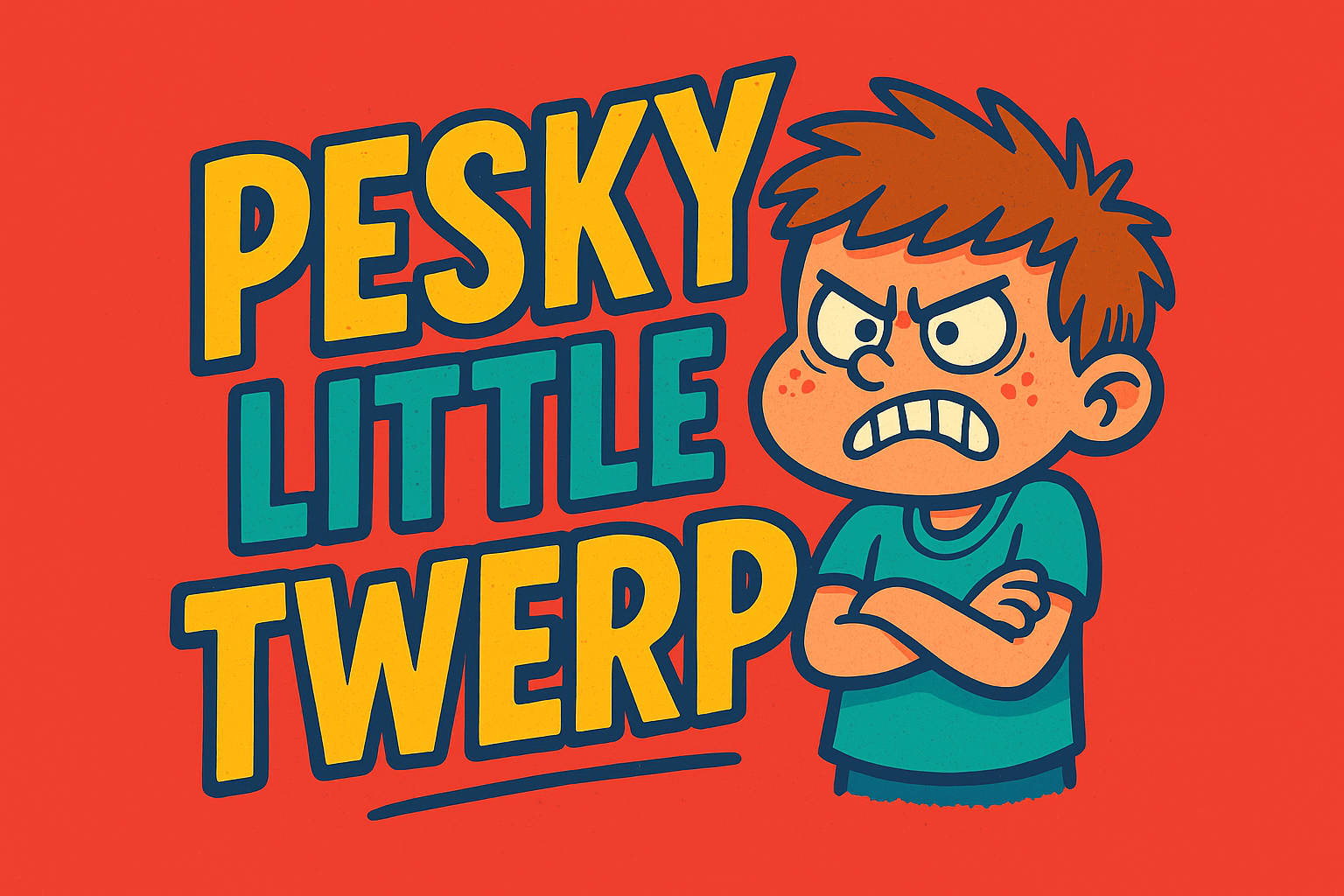
If you’ve ever found yourself muttering “pesky little twerp” under your breath, you’re not alone. This quirky phrase, both humorous and oddly satisfying, has been making rounds in pop culture, crossword puzzles, and everyday conversations. But what does it really mean, and why is it suddenly getting attention online?
In this article, we’ll break down the origins and uses of “pesky little twerp,” why it’s trending, and how it has found a peculiar home in everything from TV shows to word games. Whether you’re here out of curiosity or stumbled upon it while solving a crossword, we’ve got you covered.
The Meaning of “Pesky Little Twerp”
Let’s break it down:
-
Pesky – Derived from “pest,” it refers to something or someone annoying, troublesome, or mildly infuriating.
-
Little – Used here not just in terms of size, but also to emphasize contempt or belittlement.
-
Twerp – A slang term dating back to the 1920s, meaning a silly, annoying, or insignificant person.
Put it all together and “pesky little twerp” becomes a colorful way to refer to someone (usually playfully or sarcastically) who’s irritating in a small, nagging kind of way. Think of a mischievous sibling, a classroom prankster, or even a cartoon villain—it’s an insult wrapped in humor.
Why the Phrase Is Trending
The phrase “pesky little twerp” has seen a resurgence in recent years for several reasons:
-
Memes and Online Slang: Internet culture thrives on quirky insults that are playful yet sharp. “Twerp” has that old-school charm that makes it meme-worthy.
-
TV and Cartoons: Classic villains like Plankton from SpongeBob SquarePants or Mojo Jojo from Powderpuff Girls are often labeled “pesky little twerps.”
-
Crossword Puzzles and Word Games: It’s a common clue or answer in crossword puzzles, especially those with a humorous tone.
As slang terms evolve, there’s something oddly refreshing about a phrase that feels like it came straight out of your grandparent’s vocabulary—only now it’s being revived on Reddit, Twitter, and Tik Tok.
Pop Culture Examples
From comic strips to kids’ cartoons, “pesky little twerp” is often used by frustrated characters trying to thwart a smaller, smarter, or more annoying adversary. Some iconic uses include:
-
Cartoon Villains: Lex Luthor calling Superman’s younger clone a “pesky little twerp.”
-
Sitcom Rants: Characters in shows like The Simpsons or Family Guy tossing out the phrase during comedic tirades.
-
Internet GIFs: Memes with exaggerated faces captioned “when that pesky little twerp gets on your nerves again.”
It’s a term that blends old-school sass with modern meme culture.
Crossword Clue? You’re Not Alone
Interestingly, “pesky little twerp” also pops up frequently as a clue or solution in crossword puzzles. If you’ve hit a wall trying to solve one, this “pesky biter” clue might ring a bell. Many solvers find themselves searching for the answer to similarly themed clues, often tied to animals or pesky people.
These puzzles love to use colorful language that dances the line between funny and frustrating, and “pesky little twerp” is a perfect example.
How to Use “Pesky Little Twerp” Today
So how do you use the phrase without sounding like you’re stuck in a 1930s radio drama? Here are a few modern ways to integrate it into your vocabulary:
-
Playful Insult: “My cat knocked over my coffee again. What a pesky little twerp.”
-
Ranting at Video Games: “This boss level is such a pesky little twerp—it just won’t die!”
-
Friendly Teasing: “Quit stealing my fries, you pesky little twerp!”
Used the right way, it adds a splash of humor and vintage flair to your everyday annoyance.
SEO Goldmine or Just a Quirky Phrase?
From an SEO perspective, quirky long-tail keywords like “pesky little twerp” are often overlooked, but they can be surprisingly effective at driving organic traffic. They’re:
-
Highly Specific: Which means low competition.
-
Memorable: People love humorous language.
-
Search-Intent Driven: Users are often looking for the meaning, origin, or crossword context.
Sites like Echorova benefit from exploring these niche keywords, especially when paired with trending cultural content or puzzle-solving help. Combining entertaining language analysis with smart linking strategies helps build authority and attract curious readers.
Final Thoughts
“Pesky little twerp” is more than just a fun insult—it’s a slice of linguistic nostalgia that’s gaining new life online. Whether you’re solving a crossword puzzle, watching cartoons, or just enjoying the evolution of English slang, this phrase adds character and color to any context.
And let’s be honest—there’s a pesky little twerp in all our lives. Might as well learn how to say it with style.