Dagger: History, Symbolism, and Modern Applications
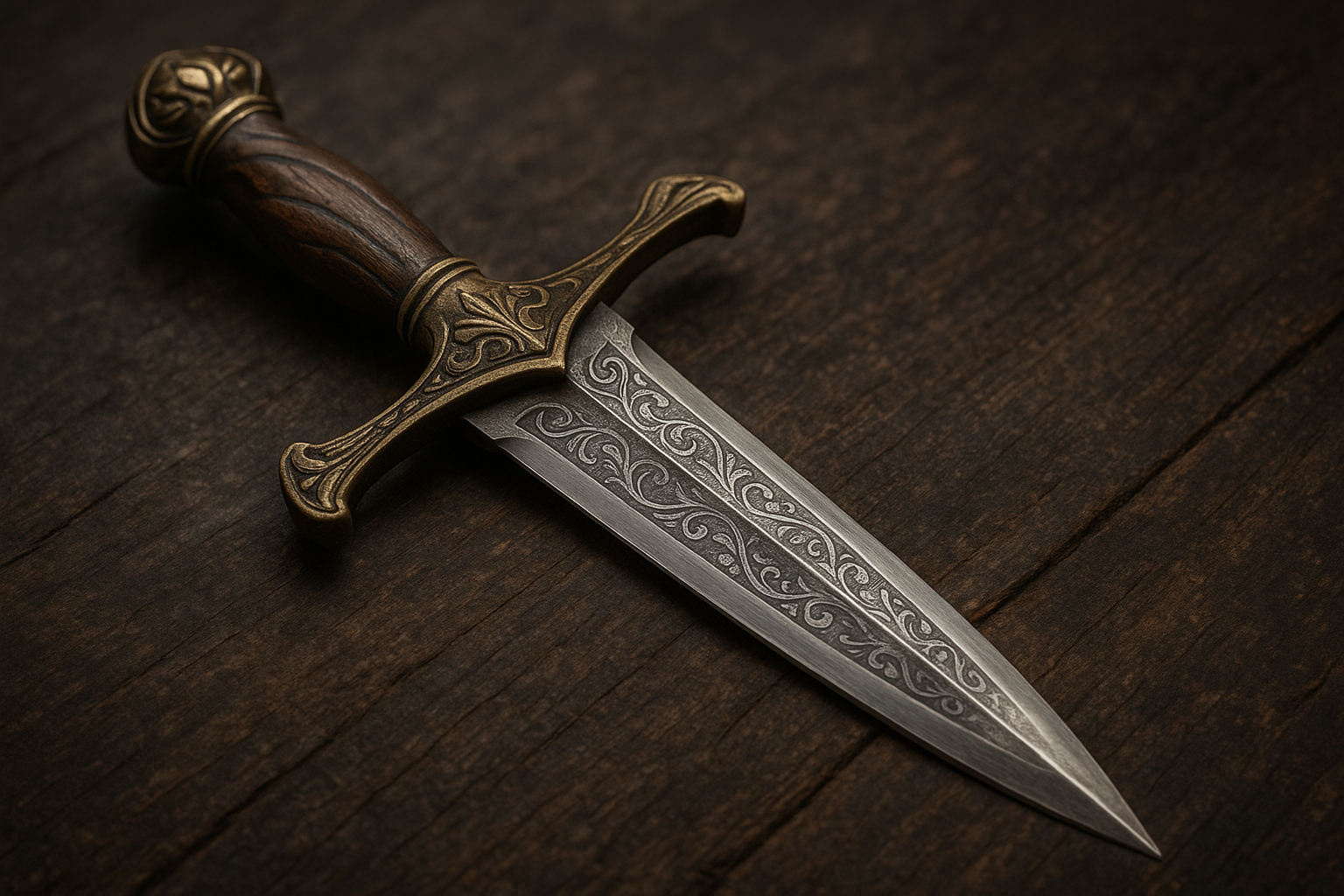
The term dagger often conjures images of ancient warriors, medieval knights, and hidden weapons used in both battle and secrecy. Throughout history, the dagger has been more than just a weapon—it has been a symbol of power, betrayal, and craftsmanship. Today, daggers continue to fascinate collectors, martial artists, and historians alike. In this article, we’ll explore the history of daggers, their cultural significance, different types, and their relevance in the modern world.
What is a Dagger?
A dagger is a short, double-edged blade designed primarily for stabbing and close combat. Unlike swords or knives, daggers are usually smaller, making them easier to conceal and use in close quarters. They are often associated with both honorable duels and treacherous assassinations, which is why they carry such a dual reputation in history.
Historical Origins of the Dagger
The dagger has one of the longest weapon histories in human civilization. Archaeological evidence shows that early humans created primitive daggers from bone, flint, and ivory thousands of years ago. As metallurgy advanced, bronze and iron daggers became common in ancient Egypt, Mesopotamia, and Greece.
-
Ancient Egypt: Pharaohs often carried ornate daggers made of gold and precious metals. These were not just weapons but also symbols of divine power.
-
Medieval Europe: Daggers became essential in warfare and personal defense, often carried as secondary weapons by knights and soldiers.
-
Renaissance Era: The dagger evolved into elegant designs like the stiletto, favored by assassins and nobles alike.
The dagger’s role shifted over time, but its presence never disappeared.
Symbolism of the Dagger
Daggers hold powerful symbolic meanings across cultures:
-
Power and Protection: In some societies, carrying a dagger symbolized bravery and honor.
-
Betrayal: The phrase “stabbed in the back” originates from the dagger’s association with treachery.
-
Spiritual Symbol: In rituals, daggers (often called athames in Wiccan practices) symbolize cutting through negativity and directing energy.
This dual symbolism—both sacred and sinister—has kept daggers relevant in myth, religion, and literature.
Types of Daggers
Over centuries, various styles of daggers have emerged. Some of the most notable include:
-
Stiletto – A slim, needle-like dagger from Italy, designed for piercing armor gaps.
-
Kris Dagger – A wavy-bladed dagger from Southeast Asia, often used in ceremonies.
-
Pugio – The Roman soldier’s sidearm, symbolizing strength and discipline.
-
Bollock Dagger – A medieval European dagger with a unique hilt design.
-
Athame – A ceremonial dagger used in modern spiritual practices.
Each type carries its own cultural and historical importance, reflecting the diverse ways humanity has adapted the dagger.
The Dagger in Modern Times
Today, the dagger is less a weapon of war and more a cultural and symbolic artifact. Collectors value historical daggers for their craftsmanship, while martial arts practitioners train with replicas to preserve combat traditions.
In addition, the dagger has found relevance in modern software engineering as a metaphor for precision and structure. A prime example is the Dagger framework, a modern development tool that simplifies CI/CD (Continuous Integration and Continuous Deployment) pipelines. Just like the historical dagger was designed for precision in combat, this tool brings precision and efficiency to the world of software development.
Daggers in Popular Culture
Daggers frequently appear in movies, books, and video games, often symbolizing mystery, danger, or hidden power. From fantasy novels like The Lord of the Rings to modern action films, the dagger continues to capture the imagination.
Some examples include:
-
Game of Thrones – The famous Valyrian steel dagger played a crucial role in key storylines.
-
Assassin’s Creed – Hidden daggers define the stealth-based gameplay.
-
Historical dramas – Depicting duels, betrayals, and secret assassinations often highlight the dagger’s role.
This pop culture presence ensures that the dagger remains relevant even in contemporary storytelling.
Conclusion
The dagger has traveled through history as both a weapon and a symbol. From its primitive beginnings to its ceremonial uses and even its metaphorical role in technology, the dagger continues to hold significance. Whether admired for its craftsmanship, studied for its cultural meaning, or applied in modern frameworks like Dagger.io, this iconic tool remains deeply ingrained in human history and imagination.